The number of large warehouses is growing rapidly, as verified by recent research from Interact Analysis. This shows there will be 214,000 warehouses of larger than 50,000 square feet globally by 2027, up from 163,000 in 2021. Many of these warehouses will be operating as e-commerce fulfilment centres and the Interact Analysis research suggests that around 18% of all warehouses will be focused on consumer fulfilment by 2027. Currently they account for around 11% of warehousing. This increase is a testament to the ongoing growth of e-commerce globally, as the proportion of warehouses that are operated as trade distribution hubs starts to shift in favour of consumer fulfilment centres.
Significantly the research shows a very tight positive correlation between the cost of labour for warehouse workers and rates of automation implementation. Basically, the more a warehouse is spending on labour costs, the more likely they will invest heavily in automation. Rates of pay are rising rapidly due to ongoing worker shortages and the current cost of living crisis resulting in warehouse operators needing to increase their wage rates. When these factors are combined, it means the potential return on investment (ROI) from introducing automation – even partial automaton like a Warehouse Management System (WMS) software solution – is also increasing positively.
Mitigating the impact of wage rises and labour shortages inside the 4 walls of a warehouse can be addressed by adopting warehouse technology. If they have not done so already, many warehouse managers are looking to accelerate their switches to automation in order to reduce their reliance on staff to operate traditional materials handling equipment.
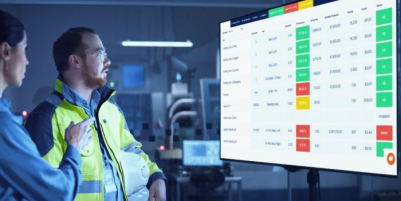
As the Interact Analysis research highlights, human labour is one of the most significant costs in a warehousing operation and investing in technology will significantly reduce this outlay. A lot of automation – carousels, conveyors, robotic picking arms, automated guided vehicles (AGVs) – can be integrated with a best-of-breed WMS to support operatives as they complete their daily workloads. Using automation together with a WMS will also benefit companies by significantly reducing error rates and increasing productivity. Any investment in a WMS is typically recouped within 12 months and the payback can be seen almost instantly. Most importantly, the benefits will continue indefinitely, as the same cost savings and efficiency improvements are seen year after year.
In summary – key benefits of using a WMS
Maximise resource utilisation – a WMS enables management ‘do more with less’, improving efficiencies without having to employ more staff;
Maximise operational performance – using a WMS to direct workers through their daily task lists has a big impact on order completion volumes, with potential to achieve a 33% output increase;
Reduce wastage – a WMS will automate and standardise all inventory movements and replenishment tasks based on pre-configured rules, so stock is always available to pick and produce never goes bad;
Reduce errors – directing pickers to the right locations and more ergonomic handsfree working means lower error rates, with quality checks built into every process;
Optimised organisation – a WMS recommends the best layout for a warehouse, with items grouped together by sales frequency and sell-by date. Dynamic location management means stock can be stored wherever there is available space and still easily located, so that up to 30% more stock can be accommodated in the same space.
If you would like to identify how to reduce your reliance on labour and achieve greater cost efficiencies with automation, contact Indigo Software. http://www.indigo.co.uk