By Steph Mitcheson, Business Development Director at Prolog Fulfilment
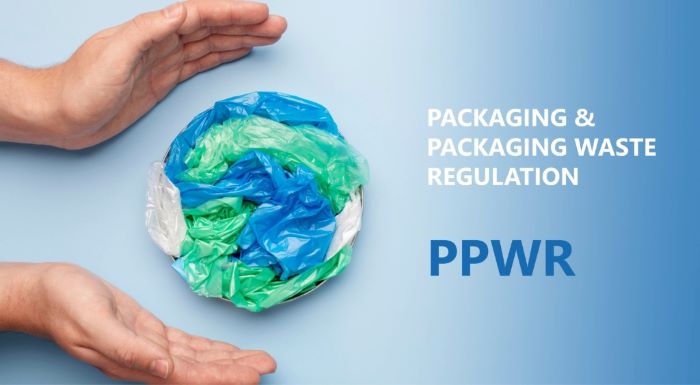
For UK beauty brands, access to the European market has always depended on meeting strict product safety standards but now packaging is moving to the centre of that equation. The EU Packaging and Packaging Waste Regulation is a new law aimed at reducing packaging waste which was bought into force in February 2025 however most of its provisions will apply from August 12th, 2026. It represents a shift in how goods are designed, marketed and sold across the European Union and cosmetics exporters are firmly in its crosshairs.
From aesthetics to accountability
Cosmetics packaging has long balanced function and brand storytelling with layered cartons, metallic finishes, multi-part pumps and tactile luxury cues. Under PPWR, much of that becomes problematic as the regulation prioritises recyclability, material reduction and standardisation – criteria that many traditional beauty formats struggle to meet.
Components that cannot be easily recycled, separated or processed at scale may simply become non-viable in the EU market. For UK exporters, that can mean rethinking not just materials, but the entire design philosophy behind their products.
The cost of complexity
The beauty sector’s reliance on multi-material packaging creates immediate friction with PPWR requirements and it is likely that mono-material solutions and modular designs that can be easily disassembled will become the norm.
But this simplification comes at a cost. Reformulating packaging specifications, qualifying new suppliers, and ensuring product compatibility with recycled materials (particularly for sensitive formulations like serums or active skincare) requires both investment and time.
At the same time, Extended Producer Responsibility (EPR) schemes across the EU will impose fees based on the recyclability of packaging. In other words, complexity doesn’t just create operational headaches -it directly affects margins.
E-commerce and the end of “empty space”
The regulation’s focus on reducing empty space in packaging has implications for cosmetics brands reliant on direct-to-consumer channels. Subscription boxes, influencer kits and gift sets are all formats built as much on presentation as on product and these will need to be re-engineered.
Secondary packaging, once justified by the brand experience, now faces scrutiny. The challenge for marketers is clear: how do you deliver a premium unboxing experience within tighter material and volume constraints?
Refill and reuse
Perhaps the most transformative aspect of PPWR is its push toward reuse systems which will likely result in refillable packaging, no longer being a niche sustainability initiative but one that is set to become a mainstream expectation.
For cosmetics brands, this opens both risk and opportunity. Refill models require new logistics, retail formats and consumer behaviours. But they also offer a way to reduce long-term material costs, deepen customer loyalty and differentiate in a crowded market.
There have been some early adopters in this space particularly in premium skincare however under PPWR, the question is no longer whether to follow, but how quickly.
Conclusion
For UK cosmetics exporters, PPWR is not just another piece of EU legislation to monitor, it is a signal of where the market is heading, which is towards transparency, circularity and reduced environmental impact. Those that delay risk more than regulatory friction. They risk losing shelf space, retail partnerships and consumer trust in a market increasingly defined by sustainability expectations.
In simple terms compliance with PPWR will get you through the door but there is also the opportunity for a competitive advantage from treating this new type of packaging as a core part of product innovation and brand strategy.
At Prolog Fulfilment, we’re closely monitoring these changes and will continue to help our customers prepare for what’s ahead – ensuring compliance, continuity, confidence and a competitive edge when trading with the EU.